
Essays on identity, culture and the politics of meaning

New essay · Essay 07
On The Queer Expansion
Identities are not discovered. They are imitated.
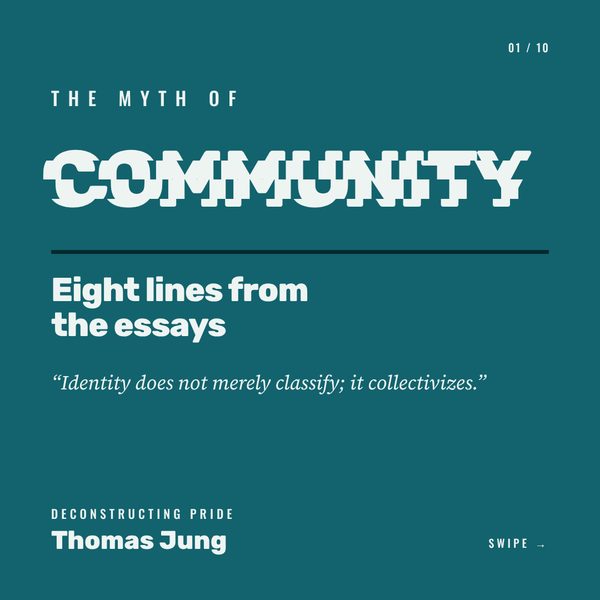
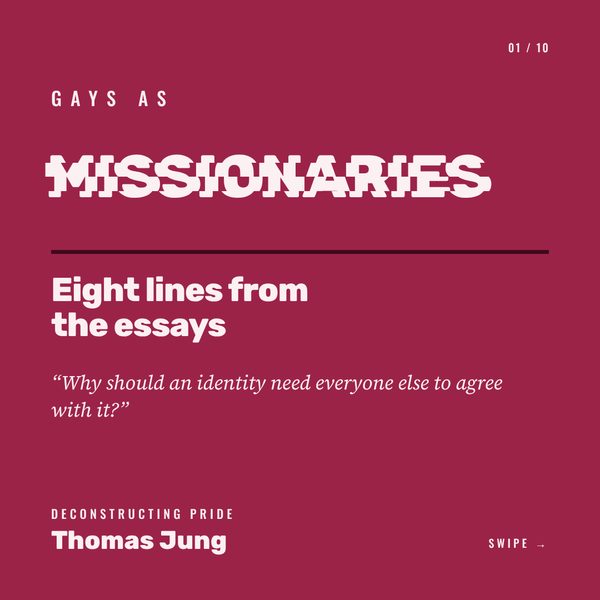
Right-wing gays claim their movement was hijacked by queer activists. This essay argues the opposite: queer is the gay identity with its one tangible condition, homosexual desire, removed. Open to anyone, it still behaves like a creed: it seeks converts, at home and abroad.
Introducing Deconstructing Pride
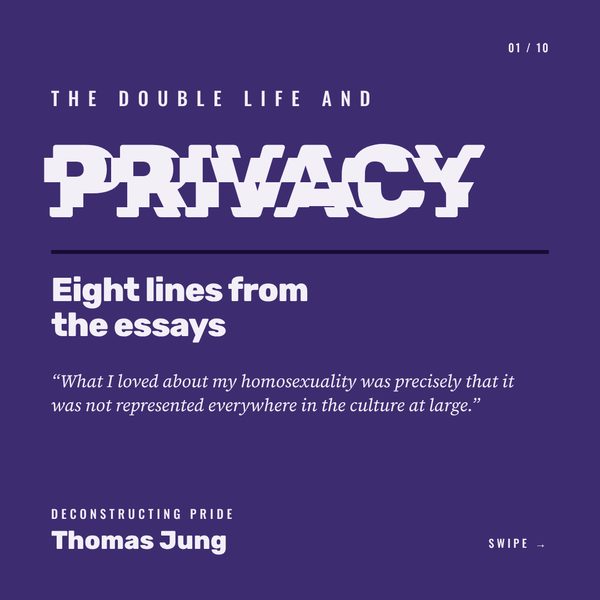
“Over the years, I have watched with ever-growing astonishment how homosexuality is represented in culture and the arts.”
— Thomas Jung, from the Foreword
From the collection
The essays


Essay 03
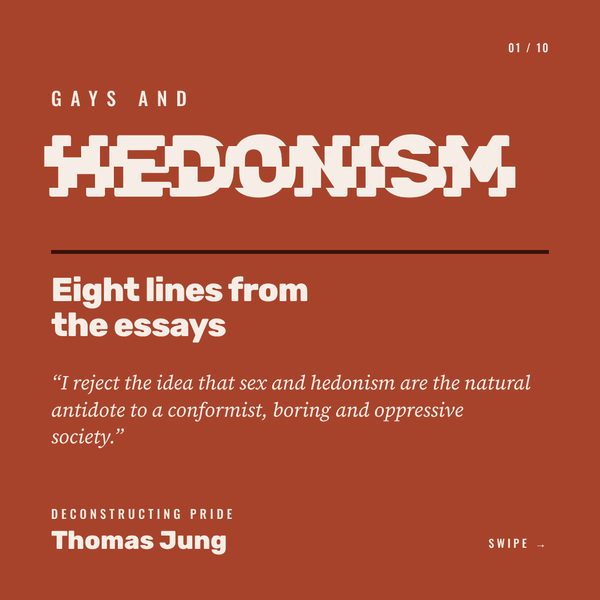
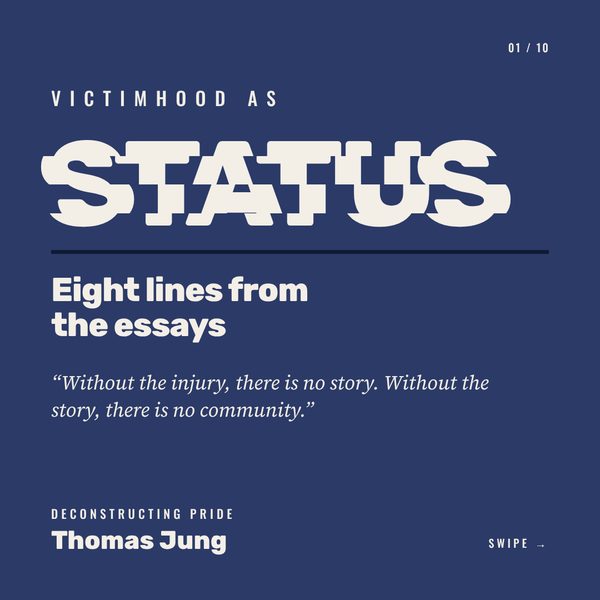
The Sentimental Exhibitionist. Gay Culture on Social Media
The victimhood narrative softens the spectacle.

Essay 04
Paradise Lost?! Gay Culture and the Promise of Sexual Liberation
Display becomes a substitute for enjoyment.

Essay 05
Tolerance. Acceptance. Glorification!
The refusal of restraint became the ultimate form of authenticity.

Essay 06
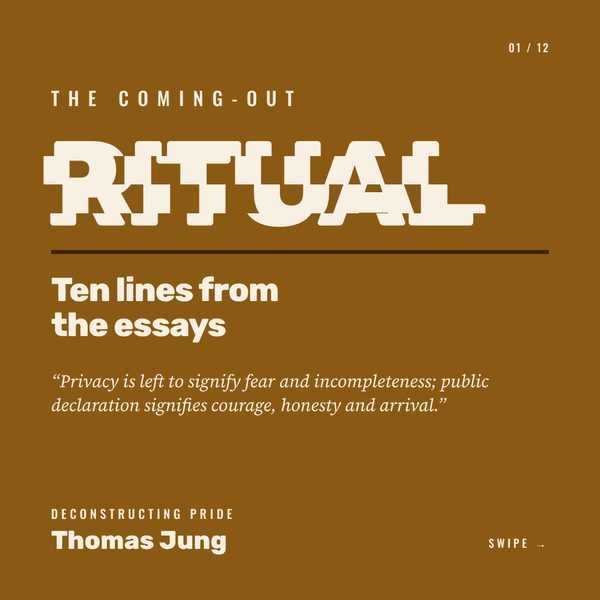
The Myth of Internalized Homophobia. How to Enforce the Gay Identity
The absence of shame and inner rejection did not protect us.
Upcoming essay
Judith Butler
Deconstructing Pride
How did the radical politics of the 1960s find a lasting home in universities? What role did the democratization of higher education play in the rise and popularization of gender theory? And how did sexual liberation develop into a political project whose ambitions extend far beyond sexuality itself?
My forthcoming essay, Judith Butler, examines Butler’s own unease with the limitations of gay identity, her turn toward gender, and the curious resistance of queer theory to any stable definition of its subject. It explores the relationship between intellectual authority, political militancy, and institutionalized activism, asking how a tradition committed to challenging established norms acquired an authority of its own.
Butler’s apparent inability to adequately explain the appeal of the manosphere raises a further question: can a philosophy so deeply concerned with vulnerability, recognition, and the prevention of violence make sense of aggression, sexual rivalry, and the renewed attraction of traditional masculinity?
Ultimately, the essay asks whether the revolutionary spirit of 1968 has been kept alive through the institutions it once challenged—and what became of homosexuality when identity itself became an endless political project.
Watch
Other voices
Stay with the argument
Get new essays by email.
No noise. One link. Unsubscribe anytime.